
Understanding Reusable Learning Objects and Their Modern Applications
The concept of reusable learning has transformed how educational content is created, shared, and utilized across diverse platforms and industries. This approach centers on developing instructional modules that can be repurposed and adapted for different learning contexts without requiring complete redesign. The methodology has gained significant traction in both traditional academic environments and unexpected sectors, including digital entertainment platforms where users engage in skill enhancement and strategic thinking.
What Are Reusable Learning Objects
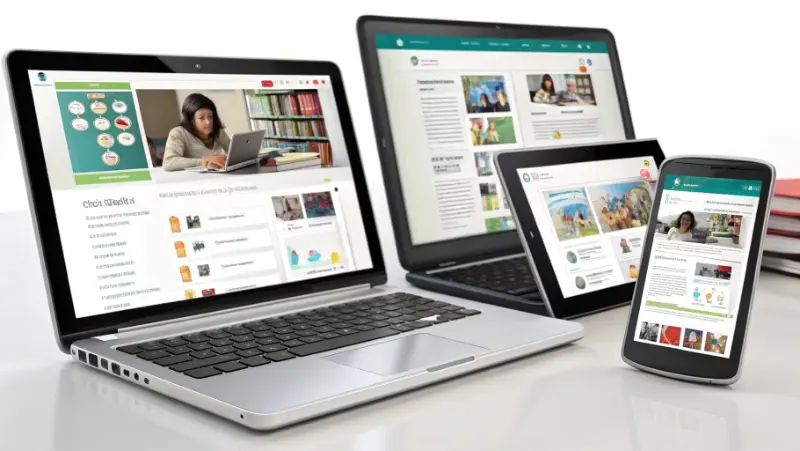
The foundation of modern educational technology rests on the principle that instructional materials can be designed for maximum flexibility and reusability across multiple contexts. This section explores the fundamental concepts that distinguish reusable learning objects from traditional educational resources.
Definition and Core Principles of Reusable Learning Objects
Reusable learning objects are discrete units of educational content designed to address specific learning objectives without being bound to a particular course or curriculum. Each object contains learning goals, practice activities, and assessment components that work together to facilitate learning. The critical characteristic of these objects is their portability, meaning they can be extracted from one educational context and inserted into another without losing their instructional effectiveness. Standardization forms the core principle behind reusable learning objects, enabling institutions to build repositories of instructional materials that can be accessed and utilized by multiple instructors and departments.
Key Characteristics That Make Learning Objects Reusable
Several essential qualities distinguish truly reusable learning objects from other digital educational tools. First, they must be granular enough to address a specific learning objective yet comprehensive enough to function as standalone instructional units. Interoperability represents another crucial characteristic, requiring these components to function properly across various technical platforms and integrate seamlessly with different learning management systems through adherence to recognized standards such as SCORM, xAPI, or LTI. Discoverability through comprehensive metadata is equally vital. Each learning object should be tagged with information describing its subject matter, educational level requirements, targeted learning outcomes, and technical specifications.
Historical Development of Reusable Learning Frameworks
The concept of reusable learning objects emerged in the late 1990s when educational institutions sought methods to leverage digital technologies for more efficient content production. Early pioneers recognized that traditional course development involved repeatedly creating identical instructional materials, wasting valuable time and resources. During the early 2000s, formal technical standards emerged that would enable widespread adoption. Organizations like the IEEE Learning Technology Standards Committee and the IMS Global Learning Consortium developed specifications addressing interoperability challenges. As technology matured, focus shifted from purely technical functionality toward pedagogical effectiveness, leading to more sophisticated approaches to granularity, sequencing, and contextualization.
Benefits of Implementing Reusable Learning Objects

Adopting reusable learning objects delivers tangible benefits across operational, pedagogical, and financial dimensions. Understanding these advantages enables institutions to make informed decisions about investing in the infrastructure and training necessary to successfully implement modular content approaches.
Advantages for Educational Institutions and Content Creators
The implementation of reusable learning objects produces substantial benefits affecting multiple aspects of educational content creation and delivery. These advantages become particularly evident when institutions serve large student populations with diverse learning needs and preferences.
| Benefit Type | Traditional Approach | Reusable Learning Objects | Impact Level |
|---|---|---|---|
| Development Time | 200–400 hours per course | 80–150 hours per course | High reduction |
| Content Updates | Full course revision required | Targeted object updates | Significant efficiency |
| Customization Capability | Limited without major rework | Flexible mix-and-match | Higher adaptability |
| Quality Consistency | Varies by instructor/developer | Standardized through reviews | Higher reliability |
| Resource Sharing | Difficult across departments | Repository-based access | Higher collaboration |
One of the most significant advantages is the dramatic reduction in duplicated effort. When multiple instructors need to teach identical concepts, they can draw from a shared repository of approved learning objects rather than creating everything from scratch.
Cost Efficiency and Time Savings in Course Development
The savings from implementing reusable learning objects extend beyond time to encompass substantial financial benefits. Organizations adopting this approach typically experience reduced overall content development expenditure while simultaneously achieving higher content quality. The investment in creating high-quality reusable objects pays dividends when those objects are deployed across multiple courses and updated centrally rather than within each individual implementation. The reusable approach also delivers advantages in time-to-market, particularly in industries where training requirements evolve rapidly.
Scalability and Adaptability Across Different Learning Environments
Reusable learning objects demonstrate scalability in multiple dimensions. As student populations grow, institutions can expand course offerings without proportionally increasing content development expenditure. The same instructional materials that serve one hundred students can serve one thousand with minimal additional investment. Adaptability across different learning contexts represents another significant benefit. For instance, a well-designed learning object on statistical analysis could be deployed in business courses, public health programs, and psychology curricula, with each implementation adding context-relevant examples while retaining the core instructional content.
Technical Standards and Implementation Methods

Successful deployment of reusable learning objects requires attention to both technical infrastructure and organizational processes. This section examines the standards and methodologies that enable interoperability, discoverability, and effective management of learning object environments.
Metadata Standards for Learning Object Repositories
Efficient organization and retrieval of reusable learning objects depends on robust metadata standards that describe each object's characteristics in sufficient detail. The most widely adopted standard is IEEE's Learning Object Metadata specification, which defines a comprehensive set of attributes covering educational, technical, and rights management dimensions. Metadata categories typically include general information such as title and description, lifecycle details indicating the object's current version and development status, technical specifications listing required platforms and formats, educational characteristics like difficulty level and typical learning time, and rights information clarifying usage permissions and duration.
Best Practices for Creating and Organizing Reusable Content
Creating truly reusable learning objects requires careful attention to both pedagogical principles and technical specifications. The following practices have proven essential for developing objects that function effectively across diverse contexts:
- Establish clear, measurable learning objectives before beginning content development. Each object should target a specific, assessable outcome that can be verified independently of surrounding course materials, ensuring the object retains instructional value when removed from its original context.
- Maintain appropriate granularity by designing each object to address a single concept or skill. Objects that attempt to cover excessive ground become difficult to reuse because they cannot align with every curriculum.
- Design for context-independence by avoiding references to specific courses, institutions, or timeframes. Learning objects containing phrases like "as we discussed last week" fail when transferred to different environments.
- Ensure consistent visual presentation and navigation patterns across related objects. Visual and functional consistency reduces cognitive load when learners encounter multiple objects within a course, creating more coherent learning experiences.
- Incorporate assessment components that provide immediate feedback and can adapt to different grading schemes. Objects including built-in assessment activities deliver more complete learning experiences and minimize integration work when deployed in new courses.
Integration with Learning Management Systems
Technical integration with learning management systems represents a critical factor determining the practical utility of reusable learning objects. Most modern LMS platforms support various standards for incorporating and managing learning objects, with SCORM remaining the most widely implemented standard despite newer alternatives like xAPI gaining adoption. SCORM integration enables standardized communication between learning objects and the host LMS, allowing the system to launch objects, track completion status, and record assessment scores. Actual implementation typically involves packaging learning objects according to the chosen standard's specifications, uploading these packages to the LMS repository, and configuring how objects appear within courses.
Reusable Learning Objects in Online Casinos

The application of educational design principles to enhance player learning and engagement represents a surprising but valuable use case for the gaming industry. This section examines how online casinos employ reusable learning methodologies to create structured skill-building experiences that benefit both players and platforms.
How Gaming Platforms Apply Educational Design Principles
The intersection of educational methodology and gaming platforms offers fascinating insights into unconventional applications of reusable learning concepts. Online casinos increasingly incorporate educational design principles to facilitate player learning and engagement, creating structured learning experiences that help users understand game mechanics and betting strategies. Many online casinos now feature tutorial systems comprising modular instructional components that mirror reusable learning objects, breaking down complex games like poker and blackjack into discrete skills and concepts.
The reusable nature of these casino learning modules enables platforms to deploy the same instructional content across multiple games where concepts overlap. For example, modules on probability theory, bankroll management, or opponent behavior analysis can be utilized across various card games with minimal modification.
Skill Development and Strategic Thinking Through Casino Gaming
The cognitive demands inherent in casino gaming naturally create opportunities for skill development that extends beyond the games themselves. Players develop transferable abilities through casino engagement, including strategic thinking, probability assessment, risk management, and decision-making under incomplete information. Progressive learning pathways use carefully sequenced instructional units to guide players from basic rule comprehension to advanced strategic concepts.
Analytics-driven personalization represents another sophisticated application of educational principles in casinos. Platforms monitor player performance across different game types and strategic scenarios to identify patterns indicating knowledge gaps or skill deficiencies.
Training Systems and Tutorial Modules in Online Casino Platforms
The systematic training programs employed by online casinos demonstrate how reusable learning materials can be adapted for commercial entertainment contexts while maintaining educational integrity. These systems typically comprise several core components:
- Foundational rule modules that explain game mechanics, winning conditions, and basic terminology. These objects serve as prerequisites for more advanced content and are designed to be accessible even to complete novices.
- Strategic concept tutorials progressing from elementary to sophisticated techniques. Content might begin with straightforward concepts like pot odds in poker or basic strategy charts in blackjack, then advance to complex topics such as range analysis.
- Practice environments allowing players to apply learned concepts in risk-free scenarios. These practice experiences provide immediate feedback on decision quality, highlighting optimal choices and explaining why alternative plays were suboptimal.
- Performance analytics dashboards tracking skill progression over time. Players can review their development across different skill dimensions and identify strengths and areas requiring improvement.
- Community learning resources enabling players to discuss concepts and share strategies. Forums, video tutorials, and annotated hand histories from experienced players complement formal instructional content.
Future Trends and Innovations in Reusable Learning
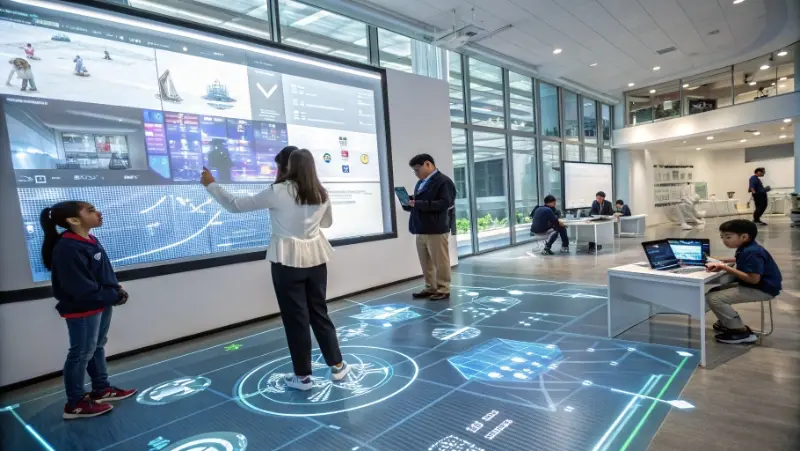
The landscape of reusable learning objects is evolving rapidly as emerging technologies enable new approaches to content creation, delivery, and learner experience. Understanding these trends allows educators and institutions to prepare for the next generation of educational content systems.
Emerging Technologies Shaping Reusable Educational Content
Several emerging technologies are converging to fundamentally transform the future of reusable learning objects. These innovations address longstanding limitations and enable entirely new forms of personalized, adaptive, and immersive learning experiences.
| Technology | Current State | Emerging Capabilities | Impact Potential |
|---|---|---|---|
| Artificial Intelligence | Basic content recommendations | Adaptive content generation and personalization | Revolutionary shift |
| Augmented Reality | Experimental implementations | Mainstream spatial learning objects | Significant new applications |
| Blockchain | Experimental credentialing | Decentralized object repositories and rights management | Moderate improvement |
| Natural Language Processing | Simple chatbot interactions | Conversational learning interfaces and assessment | Major advancement |
Artificial intelligence holds the potential to revolutionize how learning objects are created, customized, and delivered. AI-powered authoring tools can analyze existing content, extract key concepts, and automatically generate modular learning objects. More sophisticated systems can adjust object difficulty and presentation style based on learner performance data.
Artificial Intelligence and Personalized Learning Paths
The integration of AI into learning object environments enables personalized and adaptive instruction at unprecedented scale. AI systems can analyze learner interactions with multiple objects simultaneously and identify patterns indicating learning preferences, knowledge deficiencies, and optimal instructional approaches. Predictive analytics powered by machine learning algorithms can determine which learners are most likely to struggle with upcoming material based on past performance, enabling proactive instructional intervention.
Content generation represents another frontier where AI and reusable learning objects intersect. Systems can now analyze a repository of existing objects on related topics and generate new objects that maintain consistency with the collection while filling coverage gaps.
Cross-Industry Applications and Knowledge Transfer
The principles underlying reusable learning objects have proven valuable well beyond traditional educational settings. Corporate training departments, professional certification programs, healthcare education, and government workforce development initiatives have all adopted modular, reusable content development methodologies. Healthcare provides a particularly compelling example, where medical education has embraced reusable learning object concepts to create standardized training modules for clinical procedures, diagnostic reasoning, and patient communication.
The entertainment and gaming industries have also generated innovations that have migrated back into traditional education, with engagement techniques, motivational feedback mechanisms, and progressive skill-building approaches now informing educational content design.
FAQ
What is gamification in online casinos?
Gamification in online casinos refers to the application of game design elements and reward systems typically found in video games to create more engaging and enjoyable player experiences. This includes progressive achievement systems, leaderboards, experience points, virtual rewards, and narrative elements that provide context beyond individual gaming sessions. The approach recognizes that modern players expect interactive entertainment to deliver psychological satisfaction and social recognition alongside monetary outcomes.
How can gaming be used as a tool for learning and education?
Gaming serves as an effective educational tool by creating engaging scenarios where learners can practice skills and receive immediate feedback on their decisions. The interactive nature of games requires players to apply learned concepts in practical situations rather than passively absorbing information, which enhances retention and transfer to other contexts. Well-designed educational games feature progressive difficulty levels that maintain appropriate challenge and meaningful choices that develop critical thinking skills.
What are the main benefits of using reusable learning objects?
The primary benefits include reduced content development time and cost, improved quality and consistency across educational offerings, enhanced flexibility for customization and personalization, and superior scalability as educational organizations grow. By creating modular components that can be assembled and reassembled for different purposes, institutions avoid redundant development and can rapidly construct new courses when needed.
How do metadata standards improve learning object discoverability?
Metadata standards enhance learning object discoverability by providing structured, searchable descriptions that enable sophisticated filtering and retrieval within content repositories. Comprehensive metadata describes not only the subject matter but also represents technical requirements, educational level, pedagogical approach, typical completion time, and learning outcomes. Without standardized metadata, locating appropriate content in large repositories becomes nearly impossible, requiring manual review of numerous objects to find suitable materials.
What technical requirements are needed to implement reusable learning objects?
Implementation of reusable learning objects requires a learning management system or content repository supporting standards such as SCORM, xAPI, or IMS Common Cartridge. The technical infrastructure manages metadata, content search and retrieval, version control, and user permissions. Content authoring tools capable of producing standards-compliant objects are necessary, along with quality assurance processes that verify both technical compliance and pedagogical quality.
How do online casinos incorporate educational design principles?
Online casinos incorporate educational design principles primarily through structured tutorials, progressive skill development pathways, and feedback systems that help players understand optimal strategies. Many platforms employ modular learning content that breaks down complex games into manageable concepts. Practice modes allow players to experiment with different strategies and learn from mistakes without financial risk, similar to educational simulations.
Conclusion
The development of reusable learning objects has fundamentally transformed how educational content is created across diverse contexts, from traditional academic institutions to unexpected applications in entertainment and gaming industries. The modular, standardized approach enables dramatically more efficient creation and distribution of instructional materials without sacrificing quality or flexibility. As technology continues advancing, particularly in areas like artificial intelligence and augmented reality, reusable learning objects will expand their capabilities and applications. Organizations that embrace these principles position themselves to deliver high-quality, cost-effective, and adaptable learning experiences that remain sustainable over time.